Capoeira combines music and movement so closely that one rarely happens without the other. Players learn early that the sound of the instruments sets the pace, the mood, and even the kinds of kicks or dodges that fit at any moment. The practice stays grounded in simple repetition rather than complicated theory, and learners pick up the connections by playing and listening at the same time.
Traditional Instruments and Their Roles
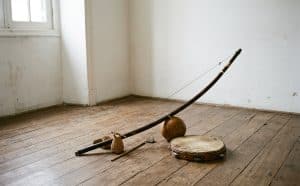
The berimbau stands at the center. It is a single-string bow with a gourd resonator, and the player changes the pitch by pressing a coin or stone against the string. A steady basic rhythm comes from striking the string with a thin stick while shaking a small rattle called the caxixi. This sound tells everyone in the circle how fast or slow the game should move.
Two other drums add weight. The atabaque gives a deep, steady beat that fills the space between the berimbau notes. The pandeiro, a handheld frame drum with jingles, supplies sharper accents and can shift the feel quickly when the player turns the wrist. A few groups also use an agogô, the double bell struck with a metal stick, to mark the main pulse.
These instruments rarely play alone. One person usually leads on the berimbau while others join in, and the combined sound keeps the players inside a shared time frame. Beginners often start by learning just the berimbau pattern so they can hear how each strike lines up with a step or a sway.
Common Rhythms and Song Structures
Most sessions open with a ladainha, a longer solo song from the berimbau player that sets a slower pace. After that, shorter songs called corridos take over. Each corrido repeats a short phrase several times, and the group answers with a chorus that stays almost the same from one song to the next.
Rhythms vary in speed and character. Some keep a measured, almost walking feel that leaves room for careful positioning. Others move faster, with quicker strikes on the berimbau that push players toward tighter turns and quicker changes of direction. The exact choice of rhythm often depends on who is leading and how crowded the circle feels that day.
Songs themselves mix Portuguese lines with older call-and-response patterns. A singer might name a movement or a player, and the group answers on the next beat. This back-and-forth keeps everyone alert without needing extra signals.
How Movement Answers the Music
The basic ginga, the side-to-side sway that every player uses, stretches or tightens depending on the tempo coming from the berimbau. When the rhythm slows, the sway widens and the feet stay on the ground longer between steps. When the rhythm speeds up, the same sway shortens and the knees bend more sharply so the body can spring into a dodge or a kick without delay.
Players also listen for specific accents. A stronger strike on the berimbau often lines up with a sudden change, such as dropping into a low crouch or spinning away from an incoming kick. In slower rhythms the same accent might simply mark the end of a short sequence of steps before the players return to the ginga.
The connection works both ways. A player who starts a fast sequence can influence the musicians, who sometimes adjust the rhythm to match what they see. The result is a loop where sound guides movement and movement shapes the next sound.
Training Methods That Combine Sound and Action
Most groups practice the instruments and the movements in the same sessions rather than separating them. One common exercise has learners stand in a line and move through basic steps while one person plays a steady berimbau rhythm. Everyone must match the sway and the weight shifts to the beats they hear, not to a counted count.
Another method uses short pairs. Two players move inside a small circle while the rest of the group plays and sings. The musicians change the rhythm after a few minutes, and the pair must adjust without stopping. This teaches quick listening as much as it teaches technique.
Over time, learners begin to recognize which rhythms invite certain movements and which ones call for restraint. The skill develops through steady repetition, not through separate music lessons or separate movement drills. The instruments stay in the same room as the practice space so the two elements stay linked from the first day.